


If you’re reading my letters, you’ll know that a few weeks ago, I found myself in a position I know very well. Except this time, I wasn’t the buyer’s advocate standing beside a client. I was the buyer. And it reminded me of something I’ve spent years learning about property:
The more money at stake, the less the decision is really about the property.
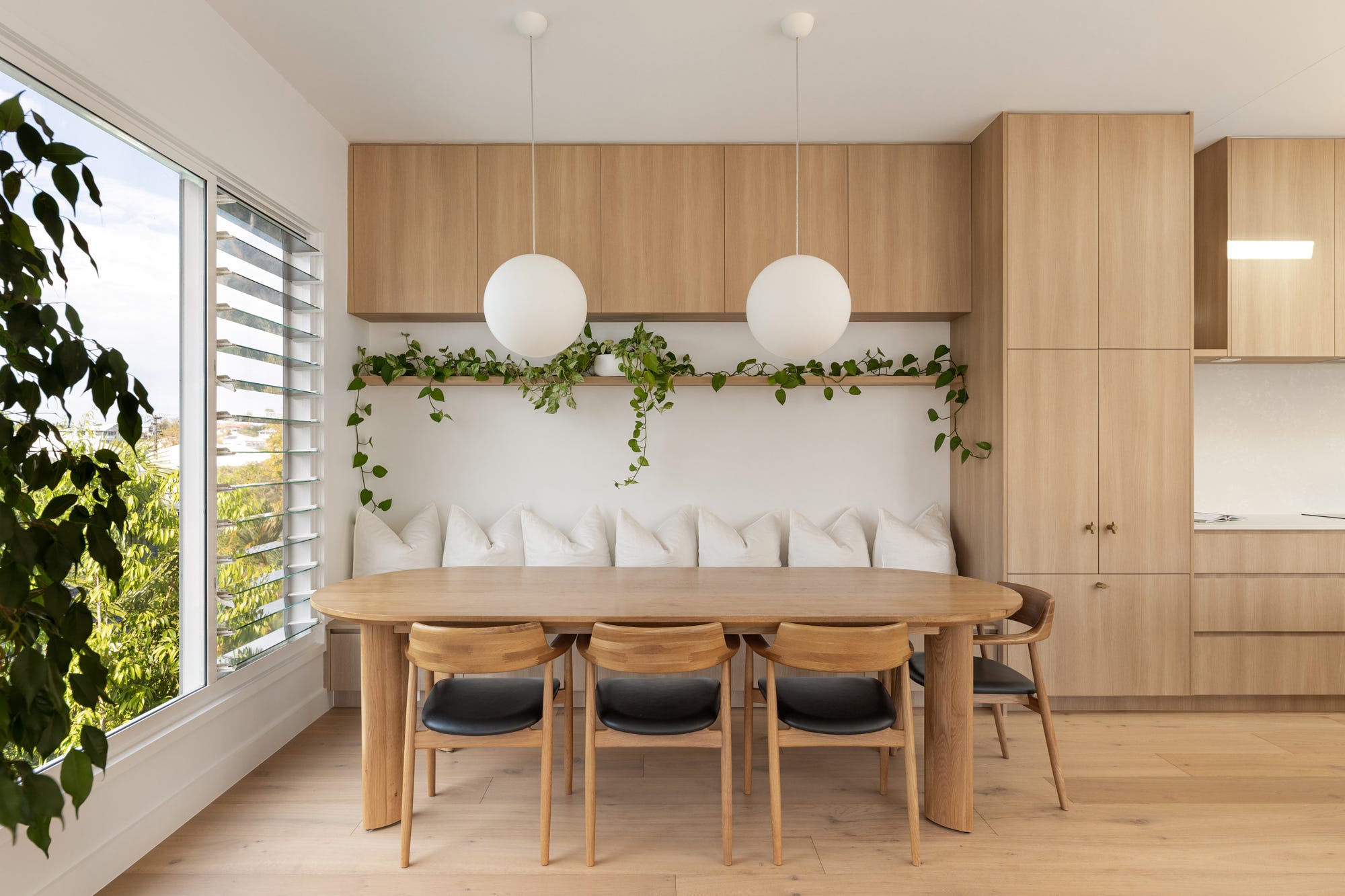
The Sydney to Brisbane dream home move
A few years ago, I worked with a couple who were relocating from Sydney to Brisbane. My clients were your typical successful professional couple who were busy with life, and had no real time to fit in a property search.
But they needed to buy, and had a very clear objective.
The brief was simple.
The perfect family home that suited their taste, lifestyle and stage of life. And it couldn’t be in a flood zone, on a busy road, or directly affected by an overhead flight path.
Being unfamiliar with the Brisbane property market, and each having commitments that would take their focus away from a time-consuming property search, they hired me to help.
I’ll also mention that like most of my clients, they didn’t trust real estate agents. Standard.
And I get it. When you’re making a multimillion-dollar decision, the person selling you the property isn’t necessarily the person you want advising you on whether you should buy it.
I took control of the search, but it wasn’t simply about finding them beautiful houses.
The real work was figuring out which properties deserved serious consideration — and which ones didn’t.
The property they almost bought
At one point, I introduced them to a property that looked very compelling.
In the beginning, it was ticking all the right boxes. Location. Size. Street appeal, and potential upside to turn what was already there into the absolute dream home.
On the surface, it looked like it could become exactly what they wanted — but there was one problem.
It required an extensive renovation, and I was concerned that this added commitment, whilst exciting in theory, would put pressure on an already busy household. Not to mention, the restrictions that local council could likely impose that would prohibit this house from ever becoming the dream.
So before we became emotionally attached to the possibility, I brought in a town planner from my professional network to investigate what could realistically be achieved on the site.
What we discovered changed the decision entirely. The renovation they were imagining was going to be significantly more difficult than they had anticipated. Planning constraints, approvals and practical considerations meant the project wasn’t as straightforward as it appeared, despite the sales agent giving reassurance it could “absolutely be done”.
The property wasn’t necessarily a bad property.
It was simply the wrong property for them.
And that’s an important distinction, because one of the most expensive mistakes buyers make is trying to make the wrong property fit their vision.
They fall in love with the potential of what the house could be. Then they start rationalising, and before they know it, they’re spending millions of dollars, and hours of time on something that was never quite right.
We walked away.
And that decision saved them considerably more than any negotiation ever could.
Then came the real test
Eventually, we found the One. The right property, in the right location, with the right configuration. And no renovations required.
This was the one we’d been waiting for. Due diligence stacked up, and it felt right. But now we had a different problem.
Price.
The property was going to auction, and when you’re buying at this level, the difference between paying a fair price and paying an emotional price can be hundreds of thousands of dollars.
Their budget gave us plenty of room, but I didn’t want to use it. And of course, neither did they if we could avoid it.
That’s something I think buyers often misunderstand about having a sizeable budget. Your budget is not your target. It’s your maximum tolerance for the decision.
There is a huge psychological difference between:
“We can afford $3 million.”
and
“This property is worth $3 million.”
Those are two completely different statements.
My job was to determine where the second statement stopped being true, and then protect them from crossing that line.
The psychology of the auction
Auction day is where property becomes particularly interesting, because rational decision-making becomes incredibly difficult when you’re standing in a crowd, watching other people bid on the home you want — and this is why I always recommend my clients not attend the auction, or at the least, watch it unfold from afar, whilst I go into bat on their behalf.
Because if you’re the one who is emotionally attached to this home, your brain starts looking for signals. Someone bids. You bid. Someone else bids. And suddenly, the price is going up in hundred thousand increments faster than you can lift your paddle to place another bid.
Suddenly the number isn’t $2.5 million anymore.
It’s $2.6.
Then $2.7.
Then $2.8.
And because you’re already emotionally committed, every additional $100,000 can start to feel insignificant. That’s how people end up paying far more than they intended. Not because they’re irrational, but because the environment changes their perception of value.
My job is never to get emotionally involved in the outcome. It’s to stay completely detached from it. If the price exceeded what we had all agreed the property to be worth to my clients, we would walk. Even if that meant losing the house.
That is where your power comes from as a buyer.
The willingness to lose the deal.
We bought the property for what I considered to be a fair price, and the figure my clients were happy to pay for this house.
I didn’t have some secret auction trick, but I was able to apply a set of negotiation plays that would get the deal done. Ultimately it came down to preparation, pricing intelligence, understanding the seller’s position, reading the auction dynamics on the day, and most importantly — knowing exactly where our line was.
The family got their dream home, kept a substantial amount of their capital, and avoided another property that could have become a very expensive renovation mistake.
That’s what good advice looks like. Not simply finding you something to buy. It’s helping you make a better decision.
Because when you’re making a $3 million decision, the biggest risk isn’t missing out on the house. It’s getting the decision wrong.
Sometimes the smartest move is to walk away. Sometimes it’s to negotiate harder.
And sometimes it’s knowing the difference.
The part of this story I haven’t told you yet ...
The most interesting part wasn’t that we bought the property for hundreds of thousands less than their budget.
It was how the negotiation unfolded on auction day. Because there were several moments where the psychology of the room could easily have pushed the price much higher.
In the next article, I’m going inside this deal.
I’ll break down how I approached the auction, how I positioned myself against the competing bidders, how I helped the clients set strategic walk away figures (not just one price — but four), and the decisions I made in real time to avoid leaving hundreds of thousands of dollars on the table.
That’s the part I’m reserving for paid subscribers.
[Continue reading : The $3 Million Auction — Inside the Negotiation.]
If you’re interested in the psychology of negotiation and high-stakes decision-making at auction — particularly where the numbers are significant — this is where it gets interesting.
About the Author:
Hi, I’m Wendy — an investor, curious introvert, and independent buyer’s advocate who writes in between the deals. I live in Brisbane, Australia with my husband Ben and our labrador cross shar-pei, Lex. For 27 years, real estate has been my life — and today, I work exclusively with a limited number of private clients, and teach the principles behind wealth, negotiation, decision-making, and buying property (the smart way).
I write here most weeks, sharing what I’ve learned from the industry, the clients, and the decisions people make when the stakes are high. The question I’m forever asking is this: how can we all make better decisions so we live a better life? If you’re curious, sit and stay awhile.